

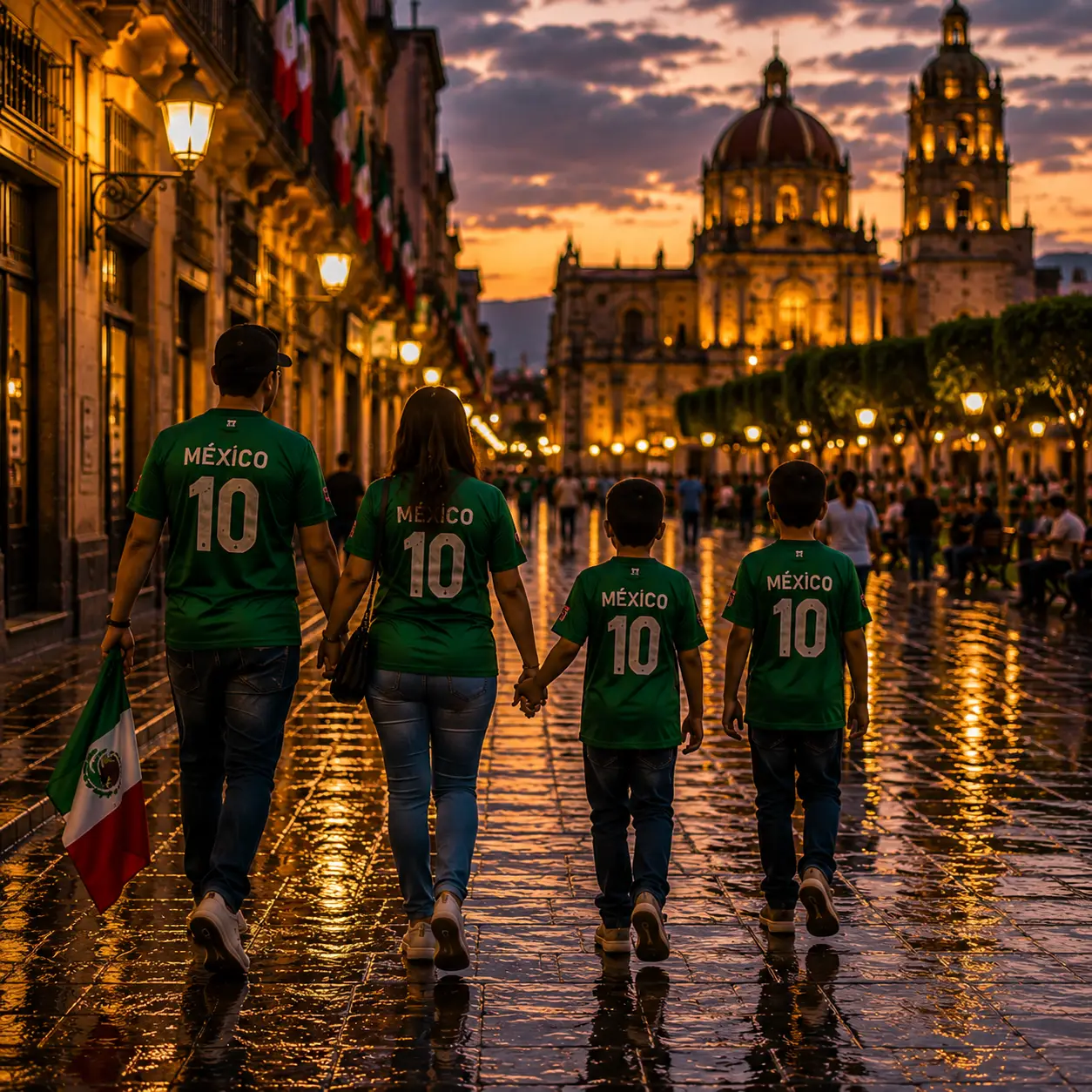
Every real change has a long middle, and it is the part we are least ready for. México opened the World Cup at the Estadio Azteca this week and beat South Africa two goals to none, and for one evening the whole country was loud in the same direction. Then the match ended, the noise died down, and everyone looked at the calendar. The next game is days away, nothing is decided, and anything can still happen. Those days in between have little to do with soccer and everything to do with how we get through change.
The road of trials and the long middle
A tournament has a long middle that no one puts on a poster. The opening is all arrival and the final is all consequence, and the group stage sits between them, where a team can play well and still go home, or start badly and still go through. Joseph Campbell had a name for this part of the journey. After the call and the first crossing comes the road of trials, the long middle where you are tested over and over and the ending is still unknown. We remember the departure and the return because those make the good photographs, while the road of trials makes poor ones, and it is also where the change actually happens.
I have spent my working life with people who are in the middle of their own changes, and the same thing comes up again and again. The man leaving a long marriage, the woman starting a new career at fifty-five, the family still learning how a new country works. Each of them can tell you about the call that started it, and each can picture, more or less, where they hope to end up. What wears them down is the long middle, the months and sometimes years after the old life has let go and before the new one has arrived, and that part asks for a kind of patience almost no one is taught.
How to stay with the long middle
Milton Erickson trusted that the body works on its own clock, slower and steadier than the hurried mind above it. When we force an answer too early, we tend to land somewhere thin and have to begin again. Carl Jung wrote about holding the tension between opposites instead of resolving it too quickly, and James Hollis writes often about the courage it takes to stay with the harder, larger task. The rains here in Querétaro make the same point. They come when they come, and the land simply waits, dry and ready, until they do.
If you are in a stretch like this, here is a small practice for the week. Once a day, name the long middle you are standing in, plainly and without apology, and then ask what it wants from you instead of how fast you can be done with it. The question tends to loosen something, so that the middle stops feeling like an obstacle on the way to the part that counts and starts to feel like the part that counts. The book this work grew into, A Life Aligned, covers the same ground in more depth.
The group stage will be over soon enough, and so will yours. Where in your own life are you in the long middle right now, after the call and before the arrival, with the ending still honestly unknown? Let it shape you while it lasts, and trust that whoever comes home different was made different here, in the middle, long before they arrived.